Why CX Needs to Prove Its Worth
Customer experience (CX) is often recognized as a key business driver, but when it comes to securing buy-in from leadership, the question remains: What’s the ROI? Many executives prioritize investments with clear financial outcomes, and while CX is known to increase customer satisfaction and loyalty, proving its impact in measurable terms is crucial.
Throughout the years, I have told CX leaders everywhere that they have around 12 to 18 months to prove the value of their CX initiatives using profound internal data, not just secondary research. And I have also seen those who ignored the warning walk out of the door with their personal items in a cardboard box.
Let me show you how to measure the ROI of CX, key metrics to track, and strategies to demonstrate its value to leadership—helping ensure CX is not seen as just a “nice-to-have,” but a core business investment.
Understanding the Business Impact of CX
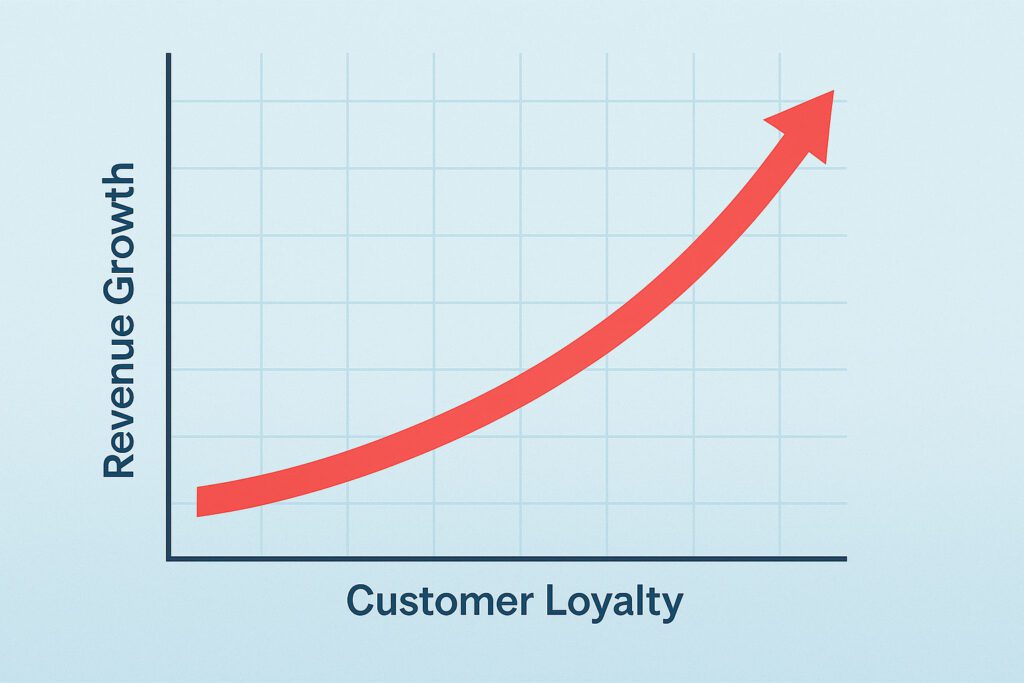
Great CX directly influences revenue, retention, and brand reputation. Companies that invest in CX see measurable gains in:
🔹 Customer Retention & Loyalty – Customers who have great experiences are more likely to return, reducing churn and increasing lifetime value (LTV). A 5% increase in retention can boost profits by 25-95% (Bain & Company).
🔹 Revenue Growth – Customers are willing to pay more for a better experience. 86% of buyers are willing to pay a premium for great customer experience (PwC).
🔹 Operational Efficiency – Improving CX reduces the cost of servicing customers by minimizing complaints, support calls, and escalations.
CX is not just about satisfaction, it drives real financial impact that must be measured and communicated effectively.
🔹 Brand Advocacy & Referrals – Happy customers become promoters, leading to organic growth through word-of-mouth and higher Net Promoter Scores (NPS).
Quick PSA: We have written a comprehensive whitepaper on research showing the impact and ROI of CX initiatives. Simply drop me a note if you would like to receive this whitepaper.
Key Metrics to Measure CX ROI

To prove the value of CX, businesses must track quantifiable metrics that align with leadership’s priorities. The most important CX-related KPIs include:
Customer Retention & Churn Rate
- Measures how many customers stay vs. leave over a given period.
- Formula: (Customers at end of period – New customers) ÷ Customers at start of period.
- Why it matters: Lower churn = higher profitability.
Customer Lifetime Value (CLV)
- Predicts the total revenue a business can expect from a single customer over their lifetime.
- Formula: (Average purchase value × Purchase frequency) × Customer lifespan.
- Why it matters: Demonstrates long-term revenue potential from improved CX.
Net Promoter Score (NPS)
- Measures customer loyalty based on the question: How likely are you to recommend us?
- Why it matters: Higher NPS leads to more referrals and organic growth.
Customer Satisfaction Score (CSAT)
- Captures immediate customer sentiment after an interaction.
- Why it matters: High CSAT correlates with increased retention and spending.
Customer Effort Score (CES)
- Measures how easy it is for customers to get support, complete a purchase, or resolve issues.
- Why it matters: Lower effort = higher satisfaction and loyalty.
Revenue Impact of CX Initiatives
- Compares revenue before and after implementing CX improvements.
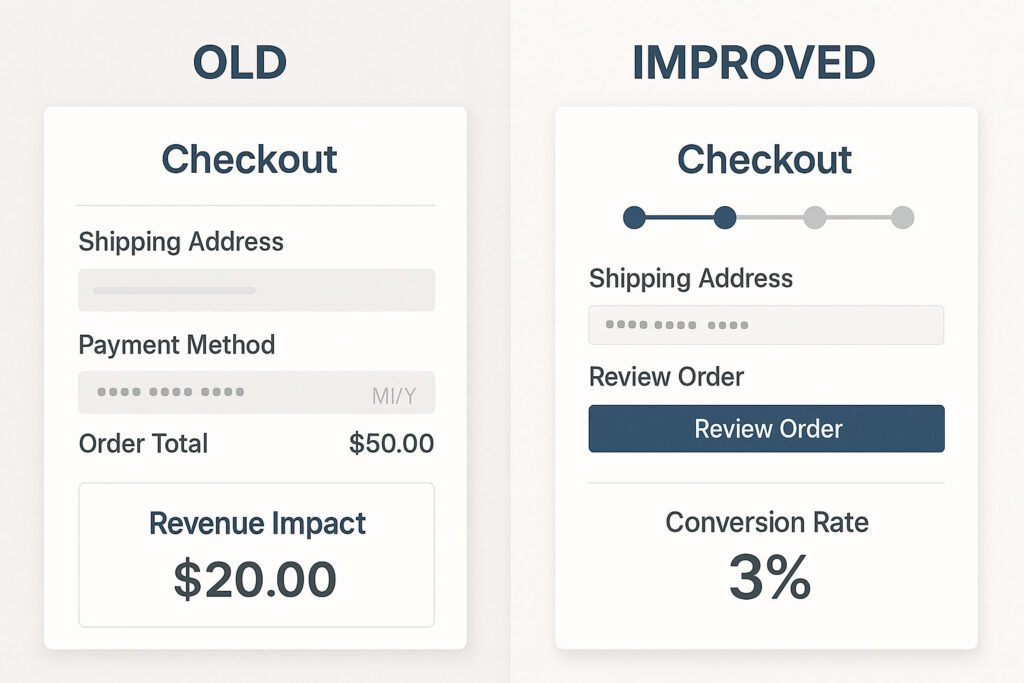
- Example: How much did sales increase after reducing checkout friction on an e-commerce site?
- Why it matters: Directly connects CX to financial outcomes.
Do this now: Tracking the right CX metrics helps quantify the impact on business performance. CX leaders often get distracted by daily business and forget the calculation of ROI for their work. Contact me, if you would like to set up a quick one-week exercise to prove your initiative’s ROI.
How to Prove CX Value to Leadership
Even with strong CX metrics, executives want to see direct financial impact. Here’s how to frame CX investments in ways that resonate with leadership:
Speak the Language of ROI
- Instead of saying, “Our NPS increased by 10 points,” say: “Our improved NPS led to a 15% increase in repeat purchases, generating $1.2M in additional revenue.”
- Tie CX metrics to revenue growth, cost savings, and competitive advantage.
Use Data-Driven Storytelling
- Combine quantitative data (metrics, benchmarks) with qualitative insights (customer stories, feedback).
- Example: Show how reducing call wait times by 30 seconds led to a 12% increase in customer retention.
Conduct A/B Testing on CX Improvements
- Implement a pilot CX initiative, measure the impact, and scale successful strategies.
- Example: Test a personalized onboarding process for new customers and track retention improvements.
Show Progress Over Time
- Rather than entering the rat hole of competitor benchmarking, show how your CX initiative has led to measurable improvements over time and how these improvements have led to proven business impact.
- Example: If you have concluded from the voice of the customer that the unboxing experience could be improved through better documentation, show how this improvement has led to cost savings via reduced contact volume in the contact center.
Calculate the Cost of Inaction
- Show how not investing in CX can lead to increased churn, negative word-of-mouth, and lost market share.
- Example: “Customers who experience two bad interactions are 4x more likely to leave—costing us an estimated $5M in lost revenue annually.”
Never forget: CX leaders must translate experience improvements into business growth and cost savings to gain executive support.
Case Study: The ROI of CX in Action

📌 Example: How CX Improvements Drove Revenue Growth
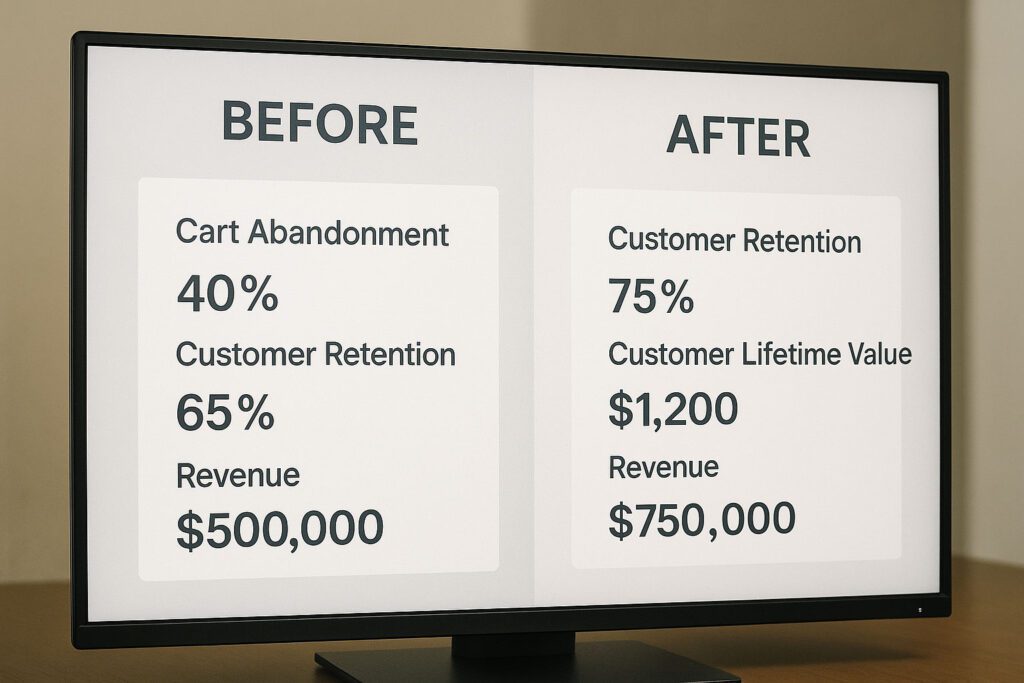
A global e-commerce company noticed a high cart abandonment rate and implemented AI-powered chat support and streamlined checkout flows. The results:
- Cart abandonment dropped by 18%.
- Conversion rates increased by 12%.
- Revenue increased by $3.5M in six months.
Note to self: Small CX improvements can drive measurable financial impact and significantly improve executive support when tracked and optimized correctly.
CX is a Revenue Driver—Not a Cost Center
Companies that prioritize CX don’t just create happier customers, they build more profitable, scalable, and competitive businesses. However, CX leaders must speak in numbers to prove value to executives.
By tracking the right metrics, demonstrating ROI through case studies, and aligning CX improvements with business goals, companies can secure leadership buy-in and drive long-term success.
How are you measuring CX ROI in your organization? Share your insights in the comments or let’s discuss strategies for proving CX value to leadership!
The chapter on how to measure ROI for your CX initiative from my CX master class is available as a quick self-paced online course here.
A one week exercise to prove the return on investment of your CX initiative is available as a service. Please contact me if you would like to know more.