
Why CX is Not One-Size-Fits-All
Over the past years, I’ve literally worked with clients on every continent of the planet. Customer experience (CX) varies widely across the world. While Western markets prioritize digital convenience and self-service options, emerging markets often value personalized, high-touch service and trust-building interactions. Businesses that apply a one-size-fits-all CX strategy risk missing out on opportunities to engage with customers in fast-growing economies like Latin America, Africa, the Middle East, and Southeast Asia.
Understanding regional customer expectations is key to adapting CX strategies for success in emerging markets. Let me share how CX differs across regions, avoid common challenges, and build strategies for localizing customer engagement in diverse markets.
How Customer Expectations Differ by Region
Different regions have distinct preferences when it comes to customer interactions, support, and brand trust. Here’s how expectations vary across key emerging markets:
Latin America: Trust & Relationship-Driven CX
- Customers value personal relationships and expect human-centered customer support rather than automated solutions.
- Social commerce is booming—many consumers prefer WhatsApp, Facebook, and Instagram for customer service and purchasing decisions.
- Strategy: Build strong relationships through localized, friendly customer service, social media engagement, and trust-based sales strategies.
Africa: Mobile-First, Community-Oriented CX
- Many consumers rely on mobile-first experiences, as smartphone penetration is higher than traditional desktop access.
- Peer recommendations and community influence play a huge role in brand trust.
- Strategy: Optimize CX for mobile platforms, leverage SMS-based customer engagement, and build loyalty through community-driven marketing.
Middle East: High-Touch, Service-Oriented CX
- Personalized, VIP-style service is highly valued—customers expect a more hospitality-driven approach.
- Trust is paramount, and customers often prefer dealing with local representatives or personalized human interactions.
- Strategy: Invest in high-touch customer support, ensure Arabic-language customer service, and emphasize brand reputation and trust-building.
Southeast Asia: Convenience & Speed Matter Most
- Digital commerce is thriving, with customers expecting fast, efficient service and instant gratification.
- Super-apps like Grab and Gojek have set a high bar for seamless, integrated experiences.
- Strategy: Offer frictionless digital experiences, ensure fast delivery times, and optimize for super-app integrations.
The view from space: CX strategies should reflect local cultural preferences, service expectations, and technological habits rather than assuming a global approach will work everywhere.



Common Challenges in CX for Emerging Markets
Businesses expanding into emerging markets often face unique CX challenges that require localized solutions:
🚧 Language & Cultural Barriers
- Many businesses struggle to provide localized customer service in multiple languages.
- Cultural differences in communication styles and customer expectations require tailored CX approaches.
- Solution: Invest in multilingual customer support and ensure customer interactions align with cultural preferences.
🚧 Infrastructure & Connectivity Issues
- In some regions, internet connectivity and digital payment adoption are still developing.
- Customers may prefer cash-on-delivery options over digital payments.
- Solution: Provide offline-friendly CX solutions, such as SMS-based customer support and flexible payment options.
🚧 Building Brand Trust & Credibility
- Many emerging markets have high skepticism towards new brands, requiring more trust-building efforts.
- Customers often rely on word-of-mouth, local influencers, and community recommendations.
- Solution: Prioritize customer testimonials, partnerships with local influencers, and hyper-localized marketing strategies.
Strategies for Adapting CX to Emerging Markets
To succeed in emerging markets, businesses must tailor their CX strategies to match local needs. Here’s how:
1. Localize Customer Service & Support
- Hire local support teams who understand cultural nuances and customer expectations.
- Offer region-specific customer service hours to match local demand.
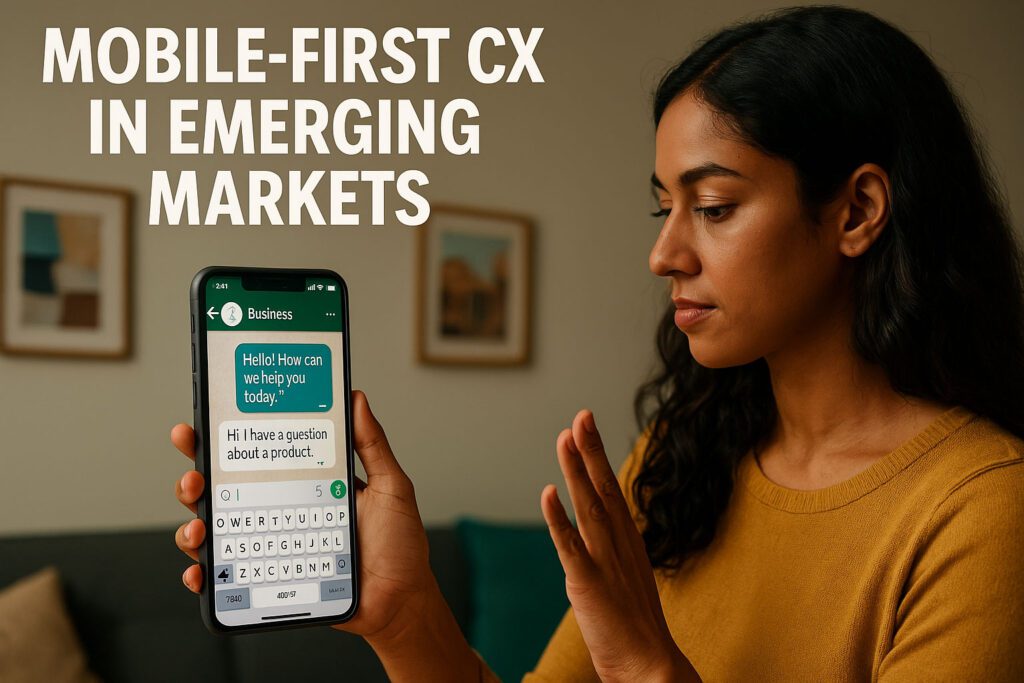
2. Emphasize Mobile-First CX
- Ensure websites, apps, and customer service tools are optimized for mobile.
- Use SMS, WhatsApp, and social media messaging for easy customer interactions.
3. Build Trust Through Personalized Service
- Provide high-touch customer interactions, especially in relationship-driven markets.
- Focus on local partnerships, brand ambassadors, and community engagement.
4. Adapt Digital Payment & Logistics Solutions
- Offer cash-on-delivery and localized payment methods where digital payments are not widely adopted.
- Work with local logistics partners to ensure reliable delivery experiences.
5. Leverage Social Commerce & Influencer Marketing
- Many emerging markets rely heavily on social media for discovery and engagement.
- Partner with regional influencers to establish credibility and local relevance.
Example: In Southeast Asia, brands like Lazada and Shopee integrate CX with social commerce, influencer engagement, and mobile-first interactions, making them dominant players in the region.

Case Example: How a Global Brand Adapted to Emerging Markets
Coca-Cola’s Localized CX Strategy
Coca-Cola has successfully adapted its CX approach in emerging markets by:
- Creating hyper-localized marketing campaigns tailored to cultural values.
- Partnering with local distributors and retailers to ensure product availability.
- Running community-based brand activations that foster strong customer loyalty.
Lesson: Brands that invest in localized CX strategies can build long-term customer loyalty and market dominance. More great examples of regionally differentiated customer experience strategies can be found in the best practice section of the Global CX Community. Here you find award-winning cases from around the globe.
CX in Emerging Markets is About Adapting, Not Copy-Pasting
Businesses that expand into emerging markets must go beyond translation and simple localization—they must understand and adapt to regional customer behavior, expectations, and trust dynamics.
By offering localized customer support, mobile-friendly experiences, personalized engagement, and flexible payment solutions, companies can win over customers and build lasting relationships in these high-growth markets.
How is your business adapting CX to global markets? Share your experiences in the comments or let’s discuss how to tailor CX for international expansion!