
The New Standard for Customer Experience
Customers today expect seamless interactions across all platforms and devices. Whether they start their journey on a website, continue on a mobile app, and finalize a purchase in-store, they expect a unified experience. Yet, many businesses still struggle with fragmented customer interactions, leading to frustration and lost opportunities. But why is omnichannel CX critical for customer loyalty and retention … the biggest challenges businesses face? And how can we build an experience that feels effortless for customers?
What is Omnichannel CX, and Why Does It Matter?
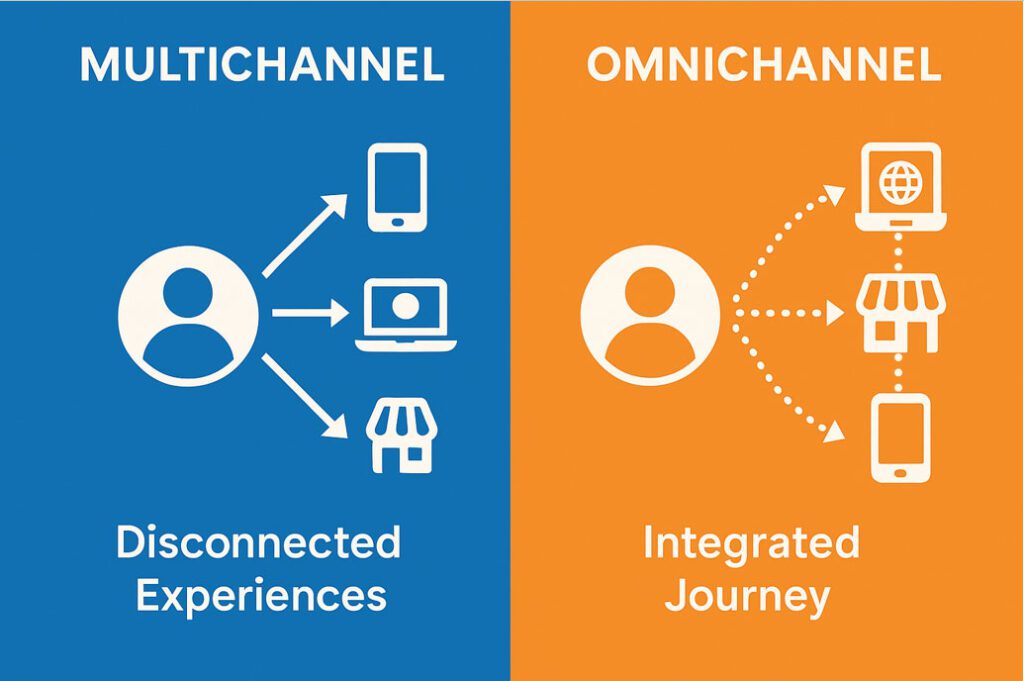
Omnichannel customer experience (CX) refers to seamless, integrated interactions across all customer touchpoints—online and offline. Unlike multichannel, where channels operate independently, omnichannel ensures that every interaction is connected, allowing customers to move fluidly between channels without repeating themselves or losing progress.
Example: A customer browses a product on a retailer’s website, receives a personalized email about it, and later visits the store—where a sales associate already knows their preferences and previous online activity.
Why it matters:
- 73% of customers use multiple channels in their shopping journey (Harvard Business Review).
- Companies with strong omnichannel strategies retain 89% of their customers, compared to 33% for companies with weak strategies (Aberdeen Group).
- Customers spend 10% more online and 20% more in-store when engaging with multiple touchpoints (Google).
We see: Omnichannel isn’t a blip—it’s the new expectation.
Common Challenges in Building a True Omnichannel Experience
While many businesses recognize the need for omnichannel, they often struggle with execution. Common challenges include:
🚧 Siloed Data & Systems
Many businesses store customer data separately in different departments (e.g., sales, marketing, and customer service). This disconnect leads to inconsistent interactions and repeated information requests.
🚧 Inconsistent Messaging & Branding
A disjointed experience occurs when customers receive conflicting messages from different touchpoints—such as price discrepancies between online and in-store offers.
🚧 Lack of Channel Integration
Many businesses operate multiple channels but fail to connect them. For example, a chatbot conversation should seamlessly transition to a live agent if needed, but often, customers are forced to start over.
My view on this: A true omnichannel experience requires centralized customer data, real-time synchronization, and consistent messaging across platforms.
The Pillars of a Seamless Omnichannel Experience
To build a customer experience that flows effortlessly, businesses must focus on these key areas:
1. Unified Customer Profiles & Centralized Data
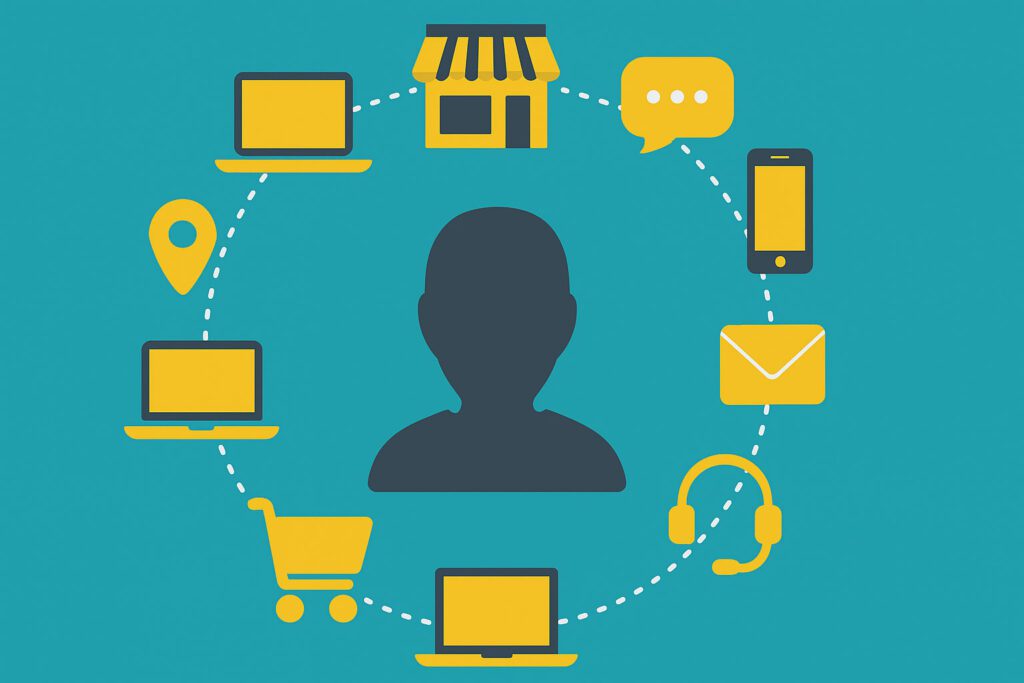
Customers expect businesses to recognize them across interactions. A Customer Data Platform (CDP) integrates all touchpoints (web, app, email, in-store) into a single profile, ensuring personalized interactions.
2. Consistent Branding & Messaging
Regardless of where a customer interacts—on a website, social media, or in-store—the brand voice, offers, and experience should remain consistent.
3. Real-Time Communication & Handoff Between Channels
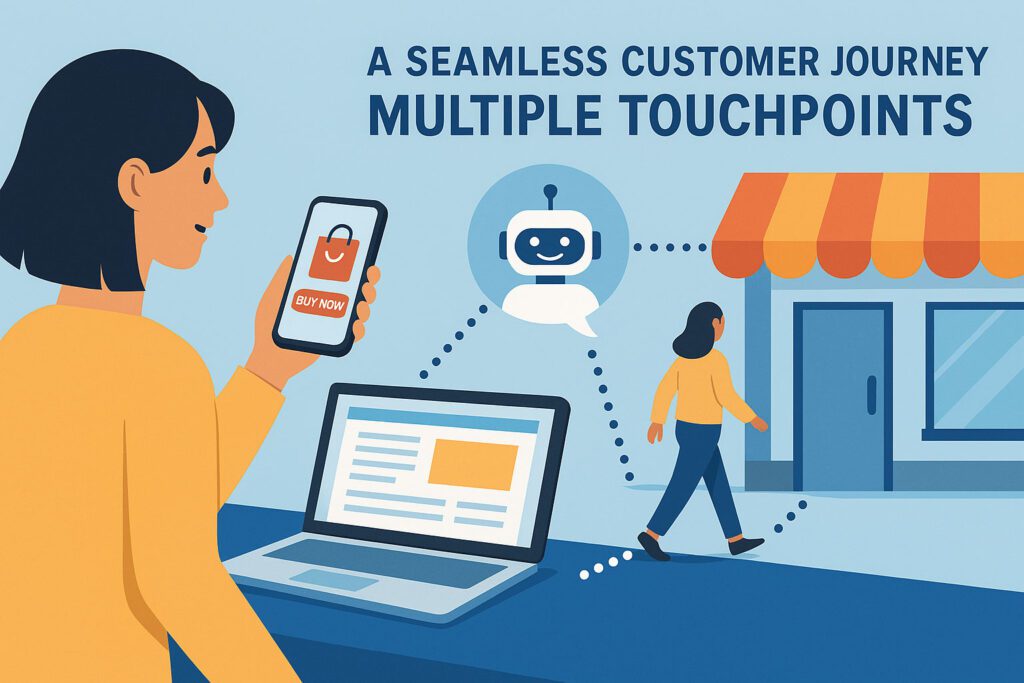
- Example: A customer support chatbot seamlessly hands off to a live agent without requiring the customer to repeat their issue.
- Example: A customer adds an item to their cart on mobile and later receives a personalized email reminder on desktop.
at the same time, some brands even fail at a unique single-channel experience. In a recent customer service call to an Internet service provider, I was transferred twice and had to authenticate myself with all three individuals because the company was not capable of doing warm, authenticated transfers internally.
4. Cross-Channel Flexibility
- Customers should be able to start on one channel and finish on another (e.g., buy online, return in-store).
- Retail leaders like Apple and Nike allow customers to check stock in-store via mobile and reserve products before visiting.
5. AI & Automation for Personalization at Scale
Predictive AI helps anticipate customer needs, sending proactive messages and recommendations based on previous interactions.

Best-in-Class Omnichannel CX: What Leading Brands Are Doing Right
📌 Disney: A Seamless Customer Journey
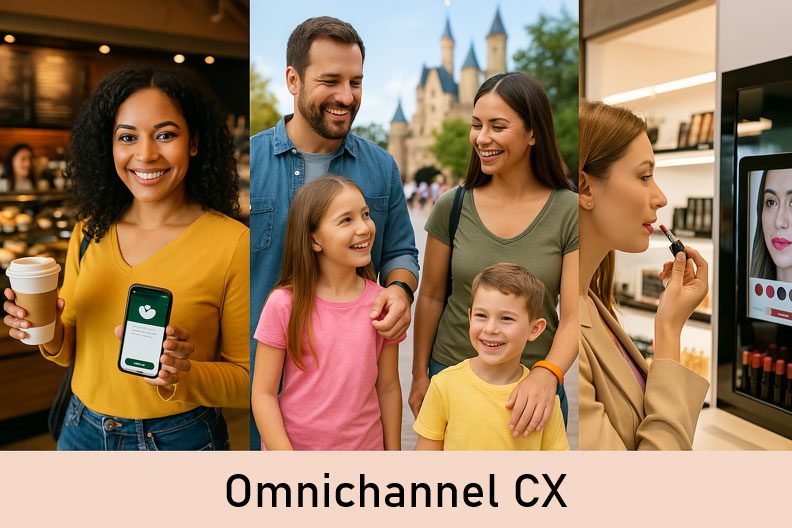
- Customers plan their trip via the Disney app, receive real-time updates at the park, and use MagicBands for purchases and fast passes—ensuring a frictionless experience across digital and physical channels.
📌 Starbucks: A Fully Connected Rewards System
- Starbucks enables customers to reload rewards balances, order ahead, and pick up in-store—all while tracking points and preferences in real time.
📌 Sephora: Personalization Across Channels
- In-store beauty consultants access a customer’s online profile, past purchases, and digital makeup preferences to recommend the right products.
My new PostIT on my screen: Leading brands don’t just offer multiple channels—they ensure those channels communicate and adapt to each customer’s journey.
Actionable Steps to Build a True Omnichannel Experience
Want to deliver a seamless omnichannel CX? Here’s where to start:
Step 1: Audit Your Current Channels
- Identify where customers drop off or experience friction between touchpoints.
Step 2: Centralize Customer Data
- Use a CDP or CRM to unify data across marketing, sales, and support teams.
Step 3: Ensure Cross-Channel Consistency
- Align offers, messaging, and branding across all platforms.
Step 4: Leverage AI for Personalization & Automation
- AI can help predict customer needs and automate interactions across channels.
Step 5: Test & Optimize Continuously Collect customer feedback, track engagement across touchpoints, and refine the experience based on real insights.

Omnichannel CX is the Future of Customer Engagement
Customers no longer see brands as a collection of separate channels. They expect a connected, intuitive journey—whether they’re engaging online, in-store, or via mobile.
Companies that master omnichannel CX will see higher customer loyalty, increased revenue, and a competitive edge in an experience-driven market.
How seamless is your brand’s omnichannel experience? Share your thoughts in the comments or let’s discuss how to optimize your strategy!